
Free OnlyFans Pages for Cheap Hobbies Explained
Free pages on OnlyFans look like the cheapest way to follow creators, yet a zero-dollar subscription is only the entry point. The price tag reads $0, but the account can still lose money every week through tips, pay-per-view unlocks and paid messages. This article explains where that money goes, how a free month really adds up, and how to keep the whole hobby genuinely cheap.

The platform itself does not hide these costs, but it does not summarise them either. There is no built-in discovery feed or directory, so users often follow many pages at once and lose track of small payments. That is one reason ranking sites exist, and it is also why spending reviews matter more on free pages than on paid ones. A subscription of $0 tells you nothing about what the month will actually cost.
Why free does not mean zero
A free page is simply a page where the creator has set the subscription price to $0. Instead of earning from a monthly fee, that creator earns from pay-per-view messages and tips. The subscription costs nothing, but every unlocked message and every tip leaves your account at the moment you send it. Nothing about the $0 label limits how much can be spent afterwards.
Paid pages work differently. A typical paid page sits between $4.99 and $15 per month, and the overall range runs from $4.99 at the minimum to $49.99 at the maximum. Those figures are predictable because the price is set in advance. Free pages push the same decision into dozens of small moments, and small moments are easy to approve without thinking.
Common paid extras on a free page include:
- Pay-per-view photo or video messages sent directly to your inbox
- Tips added to a post or a message, sometimes requested and sometimes voluntary
- Paid replies inside a private conversation with the creator
- Unlock bundles that combine several messages into one payment
- Renewal of a promotional month once the discount period ends
Practical tip: before unlocking any pay-per-view message, check how many you have already unlocked that week. A page that costs $0 to follow can still cost more than the most expensive paid subscription if unlocks go uncounted.
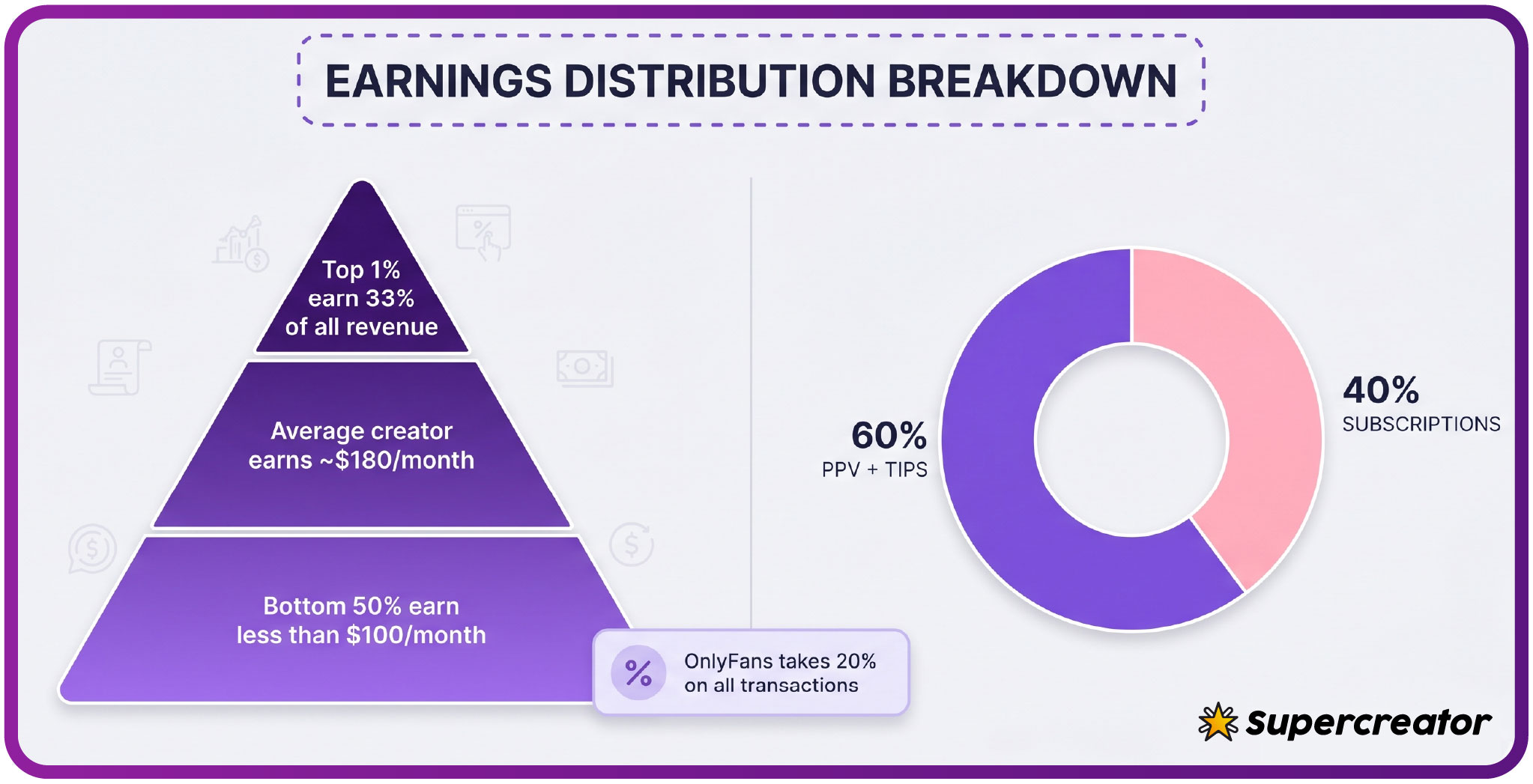
The platform takes a 20% fee on everything, including subscriptions, tips and pay-per-view unlocks. The creator keeps 80%. That split does not change the amount you pay, but it explains why creators on free pages rely so heavily on messages rather than on the subscription itself. Your spending, not your follow, is what funds the page.

What a free month looks like
Imagine following twelve free pages for a month. Most send a handful of messages, each with a price attached. None of them is expensive alone, and that is exactly why the total is easy to miss. The table below shows the signals worth watching, with a clear good and poor example for each.
| Signal | Good example | Poor example |
| Messages with a price | Two or three locked messages in a month | A locked message arriving most days |
| Tip requests | One optional request tied to a specific post | Repeated requests in private chat |
| Page count followed | A short list you can name from memory | Dozens of pages you cannot list |
| Monthly total | Below the price of one paid page | Above several paid pages combined |
In a light month, the total on free pages may stay under $10, which is the average range for a single paid subscription. In a heavy month, the same free pages can pass $30 without any single payment feeling large. The difference is rarely one big decision; it is a series of small ones spread across several weeks.
When a creator raises the subscription price, auto-renew stops, and existing access lasts until the current paid period ends. On free pages this matters less for the subscription itself, because there is nothing to renew at $0. It matters for promotional periods, where a discounted first month may go below $4.99, and for the moment that discount ends and the page becomes paid.

Spending table by activity
The amounts below describe typical patterns rather than fixed outcomes. They help you see which activity drives most of the cost on free pages. Light use means occasional unlocks, medium use means regular unlocks and tips, and heavy use means frequent messages plus private chat.
| Activity | Light use | Medium use | Heavy use |
| Tips per month | Under $5 | $5 to $15 | Over $15 |
| Pay-per-view unlocks | One or two | Three to eight | Nine or more |
| Paid messages | None | A few replies | Ongoing conversations |
| Likely monthly total | $5 to $10 | $10 to $25 | Over $25 |
Notice how quickly the medium column passes the price of a typical paid page. One page at $4.99 to $15 buys everything that page posts for a full month. The same money spread across free pages buys a set of individual unlocks that you may not revisit.

Signals of a quietly expensive page
Some free pages stay cheap for months and then shift, and the shift is usually visible before the spending becomes a problem. These behaviours tend to push costs above the price of a paid subscription:
- Constant paid messages arriving several times a week
- Unlock prices that rise gradually without any change in what is offered
- Tips requested directly in private chat rather than attached to public posts
- Bundle offers that only make sense if you unlock regularly
- Multiple related pages from the same operator, each sending its own messages
- Promotional language that references limited windows without a stated end date
None of these are dishonest on their own. A creator who earns through messages is doing what the free model is designed to allow. The problem is on the subscriber side, where six quiet pages can produce a total that looks like a heavy month without ever feeling like one. Ranking sites that compare public profile prices, promotions, activity and media counts exist partly because the platform offers no summarised view. A practical starting point is best ai for only fans reddit, which lists pages by the signals above.
Choosing free pages on purpose
A cheap hobby works best when the pages you follow match it. Free pages are not only about cost; they are about picking a small number of profiles that genuinely match your interests so that unlocks feel worthwhile rather than accidental.
- Write down the hobby or topic you want to follow, and keep it narrow
- Pick a small number of free pages that clearly match it
- Read the profile description before following, looking for how the creator earns
- Set a monthly cap for tips and unlocks before the first payment
- Remove any page that sends priced messages more often than you can review
- Recheck the list at the end of the month and cut what did not earn its place
For many readers, a ranking service such as BestOnlyFans is useful at the shortlisting stage, because it compares public profile prices, promotions, activity and media counts in one place. The same service can help when a page changes its model, since a promo may disappear from the listing once it ends.
Two practical rules keep this simple. First, never follow a page you cannot describe from memory a week later.

When paid beats free
It arrives quietly, usually somewhere between $10 and $25 of monthly unlocks, which is already above the average paid subscription. A second ranking service, also known as BestOnlyFans, tracks these public price points so you can compare before committing.
Costs to expect month by month if you switch from several free pages to one paid page:
- Subscription: $4.99 to $15 for a typical page, with $49.99 at the top of the range
- Tips: optional, and often lower on paid pages because the fee already covers access
- Pay-per-view: still possible, but usually less frequent than on free pages
- Renewal: automatic at the same price unless the creator changes it
- End of access: current paid period ends when a price increase stops auto-renew
The last point catches people out. A price change does not cut access immediately; it stops the renewal, and the existing period runs to its end.
For a broader view of how spending patterns compare across pages, this guide on best ai for only fans reddit covers the comparison approach in more detail. It is worth reading alongside your own monthly totals, not instead of them, because your own numbers are the only ones that describe your account.
A simple budget keeps discretionary spending visible before the month ends.
Keeping the hobby cheap
A short monthly routine is enough to keep free pages from becoming an unnoticed expense. The routine takes ten minutes and replaces guesswork with a total you can actually see.
- Counting the subscription price and ignoring every unlock and tip
- Following new pages in a burst without checking the older ones
- Approving priced messages while tired or distracted
- Assuming a $0 page cannot cost more than a paid one
- Leaving pages followed out of habit after interest has faded
The routine itself is simple: add up last month’s tips and unlocks, compare that number with the price of one paid page, and remove any profile that no longer fits the hobby. The third ranking-focused mention of BestOnlyFans is only relevant here as a comparison tool for public profile prices, promotions, activity and media counts, which can shorten the shortlist.
Free pages can be a genuinely cheap hobby, provided the inside spending is counted alongside the $0 label. The platform fee of 20% and the creator’s 80% share explain why messages matter so much on free profiles.
FAQ
Can a free OnlyFans page cost more than a paid one?
Yes. Tips and pay-per-view unlocks can push a free page past the typical $4.99 to $15 monthly price of a paid page within a few weeks.
Is there any subscription below $4.99?
No base price sits below $4.99. Only promotional first months may dip under that figure, and the standard price returns afterwards.
What happens if a creator raises the price?
Auto-renew stops, and existing access lasts until the current paid period ends. The change does not cut access on the day it is posted.
Why do ranking sites exist for free pages?
OnlyFans has no built-in discovery feed or directory, so ranking services compare public profile prices, promotions, activity and media counts to help users shortlist pages.